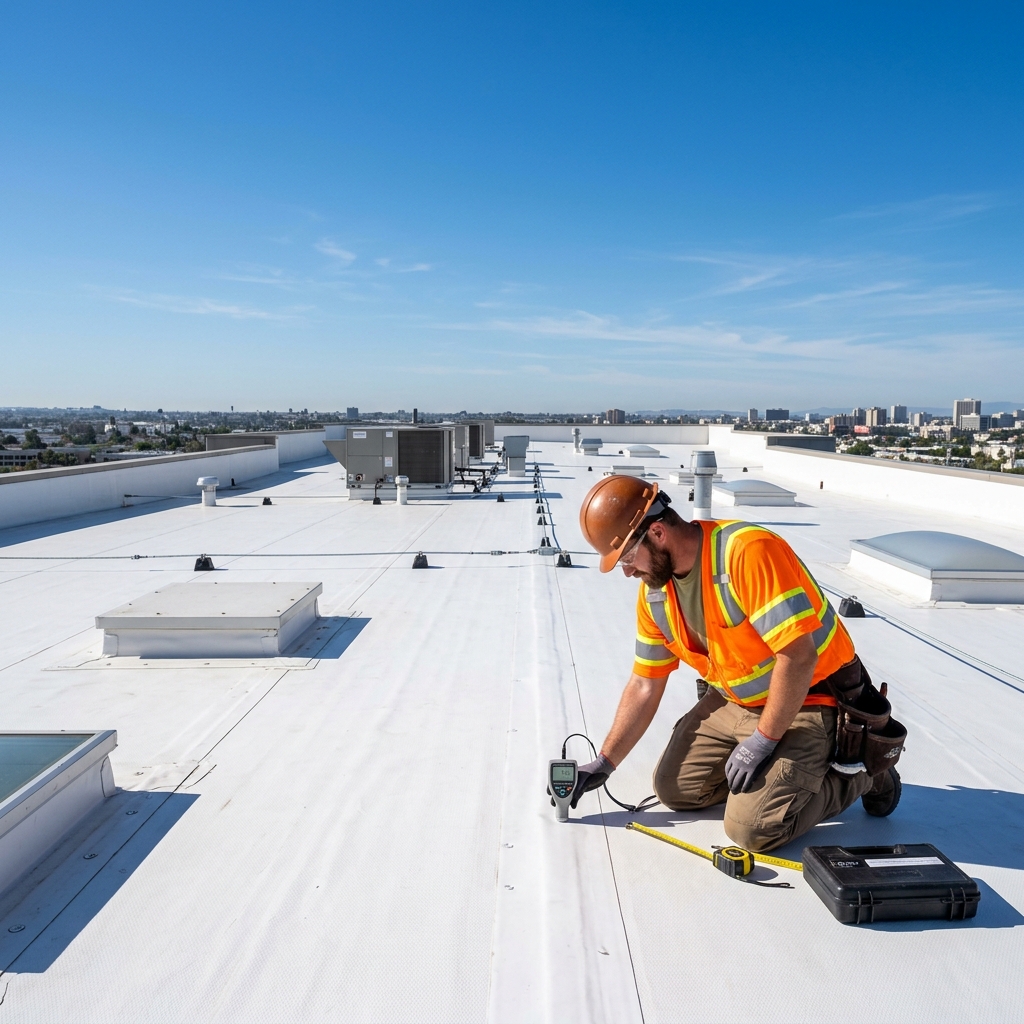
No , standard paint will not bond to a TPO roof and will peel, crack, or flake within a season. However, TPO roofs can be recoated using a specially formulated elastomeric or silicone roof coating designed to bond to thermoplastic membranes. Coating can restore reflectivity and add several years of service life, but only on a roof that's still structurally sound , it will not fix seam failures, punctures, or widespread membrane shrinkage, and using the wrong product can void your manufacturer's warranty.
Table of Contents
What Is a TPO Roof? Can You Paint a TPO Roof With Regular Paint? Why Standard Paint Doesn't Stick to TPO Paint vs. Roof Coating: What's the Real Difference? What Type of Coating Works on TPO? How to Prepare a TPO Roof Before Coating How TPO Roof Coating Is Applied When Coating a TPO Roof Makes Sense When You Should NOT Coat a TPO Roof Does Coating a TPO Roof Void the Warranty? TPO Roof Coating Cost vs. Replacement Cost How Long Does a Coated TPO Roof Last? Common Mistakes When Coating a TPO Roof DIY vs. Professional Application Alternatives to Coating a TPO Roof FAQWhat Is a TPO Roof?
TPO stands for thermoplastic polyolefin , a single-ply roofing membrane made from a blend of polypropylene and ethylene-propylene rubber, reinforced with a polyester fabric scrim. It's installed as large rolled sheets, either mechanically fastened, fully adhered, or ballasted, with seams joined by hot-air welding rather than adhesive.
TPO became the most widely installed low-slope commercial roofing membrane in North America because it combines the flexibility of rubber roofing (EPDM) with the heat-weldable seams and reflective white surface of PVC, at a lower material cost than either. Most TPO membranes are manufactured white, gray, or tan, and the white variant is specifically formulated to reflect solar radiation , a property that matters directly to the paint/coating question because reflectivity is usually the exact thing homeowners and building owners are trying to restore.
Can You Paint a TPO Roof With Regular Paint?
No. Standard exterior paints , acrylic latex, oil-based, or masonry paint , are not formulated to bond to thermoplastic membranes and will fail within one heating-and-cooling cycle. TPO is a plastic, not a porous substrate like wood or masonry that paint is designed to grip mechanically. Applied paint will sit on top of the membrane as a rigid film; the first time the membrane expands and contracts with temperature (which TPO does significantly more than a painted wall surface), the paint film cracks and delaminates.
This is true even of "roof paint" products sold at general hardware stores unless the label specifically states compatibility with TPO or thermoplastic single-ply membranes. The word "roof" on the label is not a guarantee of chemical compatibility with this specific material.
Why Standard Paint Doesn't Stick to TPO
Three material-science factors work against ordinary paint on TPO:
- Low surface energy. TPO's plastic surface doesn't provide the microscopic "tooth" that paint needs to mechanically key into. Water beads on a clean TPO surface for the same reason paint beads and pulls away rather than wetting out evenly.
- Plasticizer and mold-release residue. Manufacturing processes leave trace amounts of mold-release compounds and plasticizers on the membrane surface. Even after weathering, this residue can resurface and act as a bond-breaker between any coating and the membrane , which is why aggressive cleaning is non-negotiable before any coating is applied, not just cosmetic.
- Thermal movement mismatch. TPO membranes expand and contract substantially with roof surface temperature swings (a white TPO roof can range from below freezing to over 160°F in direct sun). Rigid paint films can't stretch and flex at the same rate, so they crack even if initial adhesion was adequate.
These same three factors are exactly what a TPO-compatible coating is engineered to overcome , which is why the product distinction below matters more than most articles let on.
Paint vs. Roof Coating: What's the Real Difference?
A coating is not just "roof paint" , it's a fundamentally different product category. Paint is designed to form a hard, relatively rigid protective film on a porous or slightly textured surface. A roof coating is an elastomeric (rubber-like) or thermoplastic-compatible material engineered to remain flexible after curing, stretch and recover with membrane movement, and , critically , bond chemically or through an engineered primer system to a low-surface-energy plastic like TPO.
| Standard Paint | TPO-Compatible Roof Coating |
|---|---|
| Flexibility after cure: Low , cracks with movement | Flexibility after cure: High , stretches with the membrane |
| Bond mechanism: Mechanical only | Bond mechanism: Chemical bond + primer system |
| UV/weathering formulation: General purpose | UV/weathering formulation: Engineered for roof-level UV exposure |
| Reflectivity engineering: Rarely rated | Reflectivity engineering: Often Energy Star / cool-roof rated |
| Manufacturer roof warranty compatibility: Not applicable/approved | Manufacturer roof warranty compatibility: Product-specific approval lists exist |
What Type of Coating Works on TPO?
Two coating chemistries are commonly used on TPO, along with a smaller category of TPO-specific proprietary systems:
- Silicone roof coatings. Generally considered the most reliable option for TPO because 100% silicone resists UV degradation and ponding water well, and several manufacturers offer silicone systems with published TPO adhesion data and primers designed for thermoplastic surfaces.
- Acrylic elastomeric coatings. Lower in material cost and easier to apply, but more sensitive to ponding water and generally require a more rigorous cleaning and priming step to achieve reliable adhesion on TPO specifically , acrylics perform better on more porous or textured roofing than on a smooth thermoplastic sheet.
- Proprietary TPO-specific coating systems. Some manufacturers produce coatings chemically formulated to fuse with TPO's polymer structure rather than simply sit on top of it, marketed specifically for "TPO recoat" applications rather than general roof coating use.
The deciding factor isn't brand , it's whether the product's technical data sheet explicitly lists TPO membrane adhesion testing and a compatible primer. A coating with no stated TPO compatibility, regardless of chemistry, is a gamble.
How to Prepare a TPO Roof Before Coating
Surface preparation determines whether a coating bonds for ten years or peels off in one. The standard sequence:
- Inspect first. Walk the full roof and document seam condition, ponding areas, punctures, and flashing detail condition before deciding to coat at all.
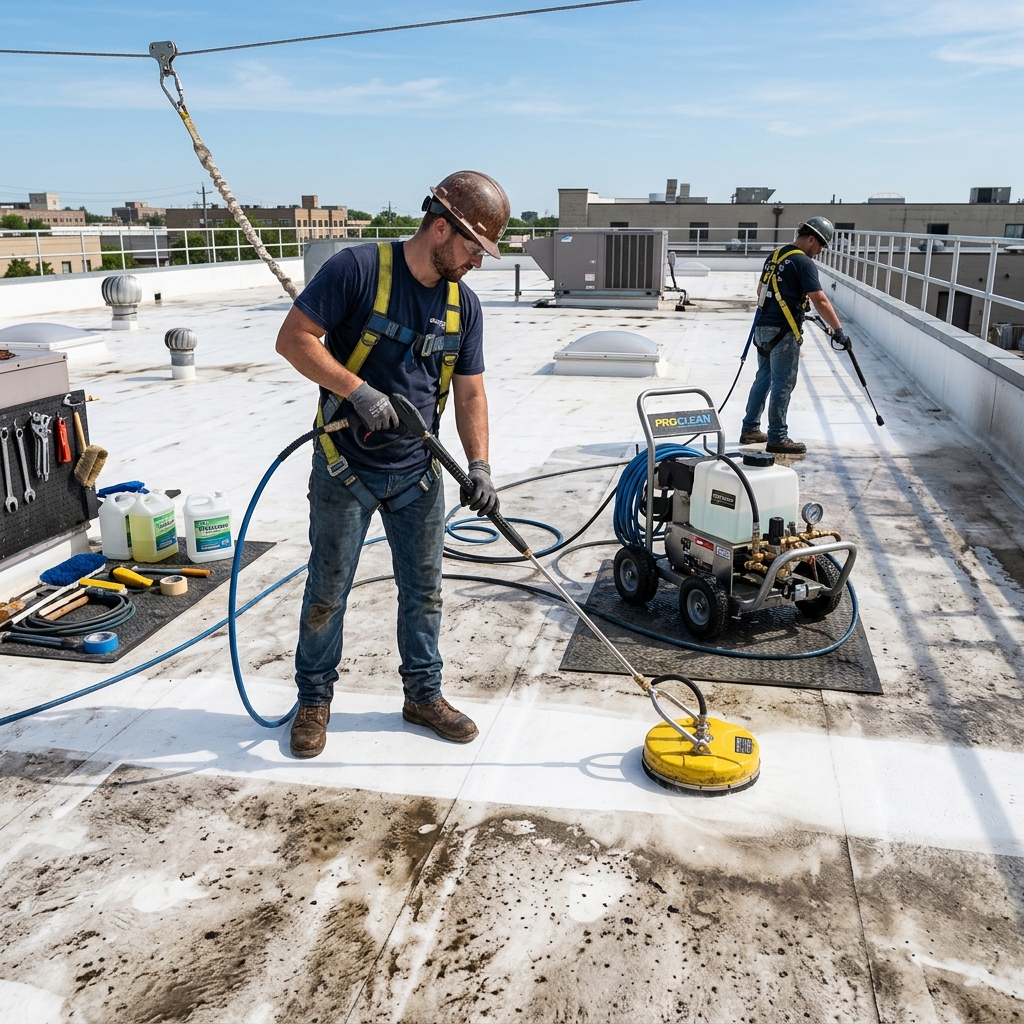
- Clean thoroughly. Use a roof-safe cleaner/degreaser (not a general household detergent) to strip dirt, chalking, biological growth, and residual mold-release compounds. This typically requires a low-pressure wash followed by a scrub in heavily soiled areas.
- Rinse and dry completely. Coatings applied over trapped moisture blister and fail; most manufacturers require the surface to be fully dry, sometimes confirmed with a moisture meter.
- Run an adhesion test patch. Apply a small test section of the intended coating system and let it cure fully (per the manufacturer's cure schedule) before committing to the full roof. This single step catches most compatibility failures before they become expensive.
- Prime if specified. Many TPO coating systems require a dedicated primer coat rather than direct coating application , skipping this step is one of the most common causes of early delamination.
How TPO Roof Coating Is Applied
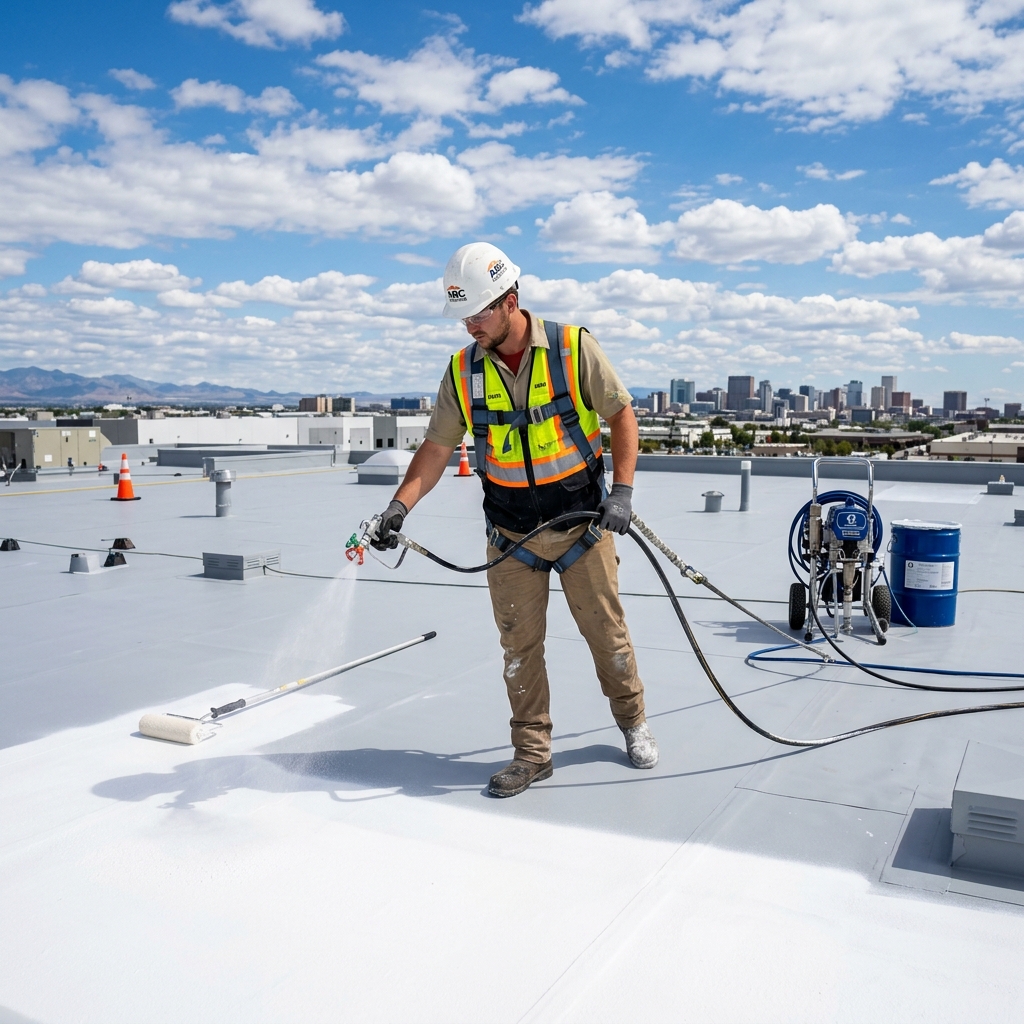
Once prepped, TPO coating systems are applied by airless sprayer or roller in one or more coats, depending on the manufacturer's specified dry film thickness (measured in mils). Key application details:
- Coverage rate. Manufacturers specify gallons per roofing square (100 sq ft); under-application is a common failure point that reduces both durability and warranty eligibility.
- Weather window. Coatings require a minimum temperature range and dry weather forecast (typically 24–48 hours without rain) to cure properly , application in the wrong conditions is a leading cause of field failures.
- Multiple coats. Most systems specify two coats for adequate mil thickness and even coverage, sometimes in contrasting colors so the applicator can visually confirm full coverage of the base coat.
- Detail work first. Seams, penetrations, and flashing are typically coated or reinforced separately before the field membrane is coated, since these are the highest-risk leak points.
When Coating a TPO Roof Makes Sense
Coating is a strong option when the membrane itself is intact but has lost performance cosmetically or thermally:
- The roof has chalked, yellowed, or grayed with UV exposure and lost reflectivity.
- Seams are still fully welded and sound, with no separation.
- There's no widespread ponding water sitting for 48+ hours.
- The membrane is free of significant punctures, tears, or brittle/cracking spots.
- The building owner wants to extend service life a number of years rather than commit to full replacement immediately.
In these cases, a coating restores solar reflectance, adds a protective UV barrier, and extends service life — ideal when evaluating job scope in a roofing estimate vs invoice.
When You Should NOT Coat a TPO Roof
Coating is the wrong call , and in some cases actively wastes money , when:
- Seams are failing. A coating is not a structural repair; it does not re-weld a separated seam, and coating over a failing seam simply hides the problem until it leaks again.
- The membrane is brittle or shrinking. TPO that has become brittle with age or has pulled away from fasteners/edges at the perimeter needs mechanical repair or replacement, not a surface coating.
- There's chronic ponding water. Standing water for extended periods degrades most coatings faster than the manufacturer's rated lifespan and often indicates a drainage/slope problem that coating can't fix.
- There are multiple active leaks. Coating a roof with unresolved active leaks treats a symptom, not the cause , the underlying puncture or seam failure needs direct repair first.
- The membrane is past 75–80% of its expected service life with widespread wear. At that point, the labor cost of proper prep and coating starts to approach a meaningful fraction of replacement cost. Learn more about itemizing commercial roofing labor and materials on a professional invoice.
Does Coating a TPO Roof Void the Warranty?
It depends , this is not a blanket yes or no. Most TPO membrane manufacturers maintain an approved-products list for field-applied coatings; using a coating and primer system from that list, applied per the manufacturer's specification, typically preserves warranty coverage or in some cases extends it under a separate coating warranty. Using an unapproved product, skipping required primers, or having the work performed by an unlicensed applicator commonly voids the original membrane warranty , because the manufacturer can no longer verify the coating didn't compromise the membrane underneath.
Before coating any roof still under warranty, contact the original membrane manufacturer (not just the coating manufacturer) and confirm the specific product is on their approved list for your membrane type and warranty tier. This single phone call is the most overlooked step in the entire process and the one most likely to save the building owner from a costly mistake.
TPO Roof Coating Cost vs. Replacement Cost
Recoating a TPO roof is meaningfully cheaper than full tear-off and replacement because it eliminates disposal costs, new membrane material, and full labor for fastening/welding a new system. As a general planning range (compare regional rates on our Wicomico County roof replacement pricing estimator):
| Typical Cost Driver | Details |
|---|---|
| TPO recoat | Cleaning, priming, coating material, labor , lower material cost, lower disposal cost |
| Full TPO replacement | Tear-off/disposal, new membrane, fasteners/adhesive, full labor, potential insulation replacement |
Recoating is typically a fraction of full replacement cost per square, which is exactly why it's attractive for roofs that are cosmetically aged but structurally sound , the savings only hold up, though, if the roof actually qualifies for coating per the criteria above. Coating a roof that needed replacement anyway defers the real cost rather than avoiding it.
How Long Does a Coated TPO Roof Last?
A new TPO membrane is typically rated for 15–25+ years, depending on membrane thickness and manufacturer. A properly applied, manufacturer-approved coating system on a sound membrane commonly adds 10–15 years of extended service life, with many silicone systems carrying their own 10-year+ manufacturer warranty when installed by a certified applicator. The added lifespan depends heavily on: correct product selection, thorough surface prep, adequate mil thickness, and the underlying membrane's condition at the time of coating , a coating applied to a membrane already near end-of-life will not perform to the coating's full rated lifespan.
Common Mistakes When Coating a TPO Roof
- Skipping the cleaning step or under-cleaning. Residual dirt, chalking, or mold-release compound is the single most common cause of coating delamination.
- Using a coating with no stated TPO compatibility. Applying a generic acrylic roof coating with no TPO adhesion data is a gamble regardless of how well it's applied.
- Applying in the wrong weather window. Coating applied before rain, in high humidity, or outside the temperature range specified on the data sheet frequently fails to cure properly.
- Under-applying material. Rolling or spraying a thin, uneven coat to save material cost reduces both UV protection and rated lifespan.
- Coating over unresolved leaks or seam failures. This hides the problem temporarily and often makes the eventual repair more expensive.
- Not checking warranty approval first. Voiding an existing membrane warranty over an unapproved coating product is an avoidable, expensive mistake.
DIY vs. Professional Application
Small residential outbuildings or low-slope sections may be within reach of an experienced DIYer comfortable with roof access and airless sprayer or roller application. However, most TPO roofs are commercial or large residential low-slope systems, and professional application is strongly recommended because:
- Contractors carry moisture meters and infrared scanning tools to identify trapped moisture before coating, which a visual inspection alone will miss.
- Manufacturer warranty preservation frequently requires the coating be applied by a certified/licensed applicator, not a property owner.
- Proper mil-thickness verification and adhesion testing require experience most property owners don't have.
- Roof access and fall protection carry real safety risk on low-slope commercial structures.
Alternatives to Coating a TPO Roof
If a roof doesn't qualify for coating, the realistic alternatives are:
- Spot repair and patching for isolated punctures or small seam failures, deferring full intervention.
- Partial overlay , welding new TPO membrane over sound sections while addressing failed areas directly, in some cases.
- Full tear-off and replacement , the only option when the membrane has widespread seam failure, chronic ponding, or has reached true end-of-life, restoring both performance and warranty coverage from zero.
11. FAQ
Can you paint a TPO roof white to improve reflectivity?
Not with standard white paint. If a white TPO roof has yellowed or chalked and lost reflectivity, a manufacturer-approved white elastomeric or silicone coating restores reflectivity , regular paint will crack and peel and does not carry a reflectivity rating.
Can you use a roller instead of a sprayer to coat a TPO roof?
Yes, rollers are commonly used, especially on smaller roofs or detail areas like seams and penetrations. Sprayers are typically faster for large field areas but require more careful masking and wind conditions.
What color coatings are available for TPO roofs?
White and light gray are most common for reflectivity, though some manufacturers offer additional colors , reflectivity performance is generally highest with white.
Is it cheaper to coat a TPO roof than replace it?
Generally yes, when the roof qualifies for coating (sound membrane, intact seams, no chronic ponding). If the roof actually needs structural repair or replacement, coating first often adds cost rather than saving it.
Does rain damage a freshly coated TPO roof?
Rain during the manufacturer-specified cure window can wash out or blister an uncured coating. This is why application timing around a dry weather forecast is critical.
Can you coat a TPO roof over existing repairs or patches?
Yes, provided the patches are sound and properly welded or sealed , the coating should be applied over a roof that's already been brought to good repair condition, not used to hide unresolved damage.
Draft Itemized Estimates and Invoices in Minutes
Use our free contractor invoice generator and estimation tools to generate legally-compliant documents for your clients.